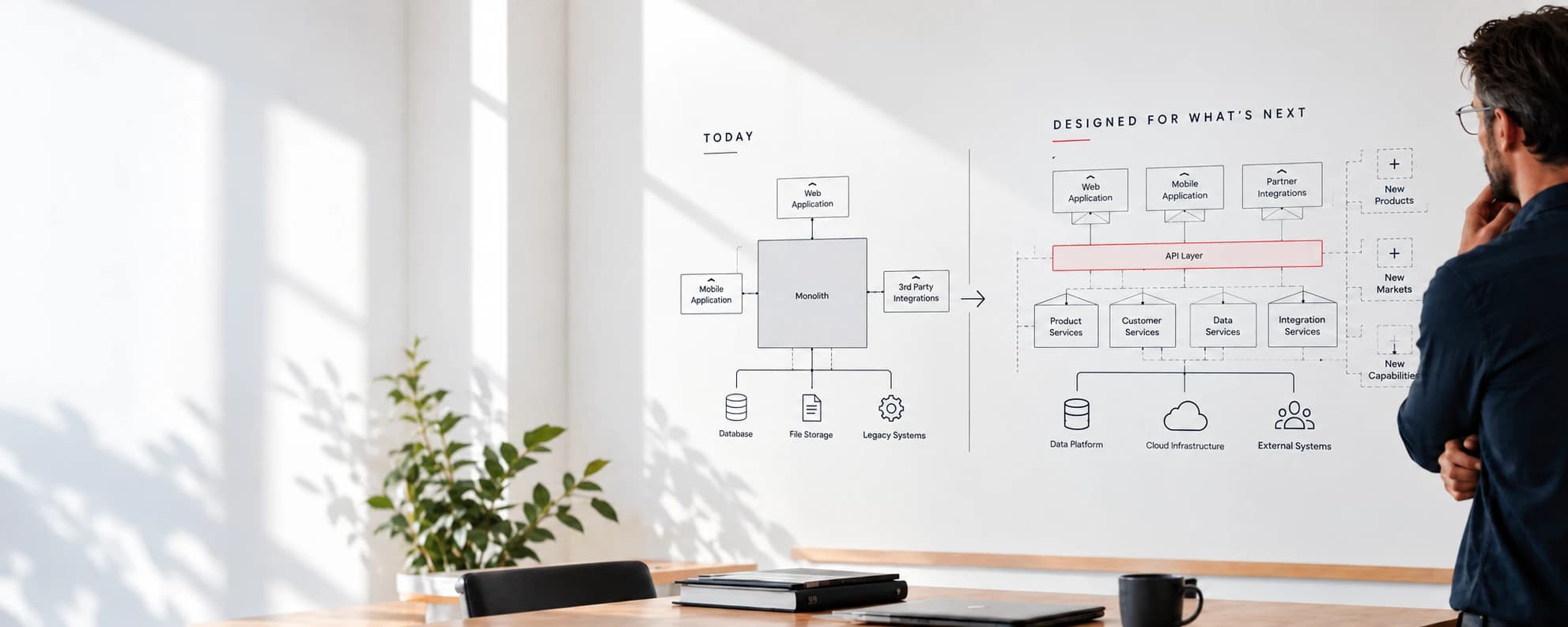
Design technology that can evolve.
Technology shouldn't become a constraint on the business it was built to support. We help organisations design products, platforms and architectures that can adapt as their business, customers and technology evolve.

When today's solution becomes tomorrow's constraint.
Most systems are designed around the needs, assumptions and constraints of their time. The challenge begins when those conditions change—but the architecture doesn't.
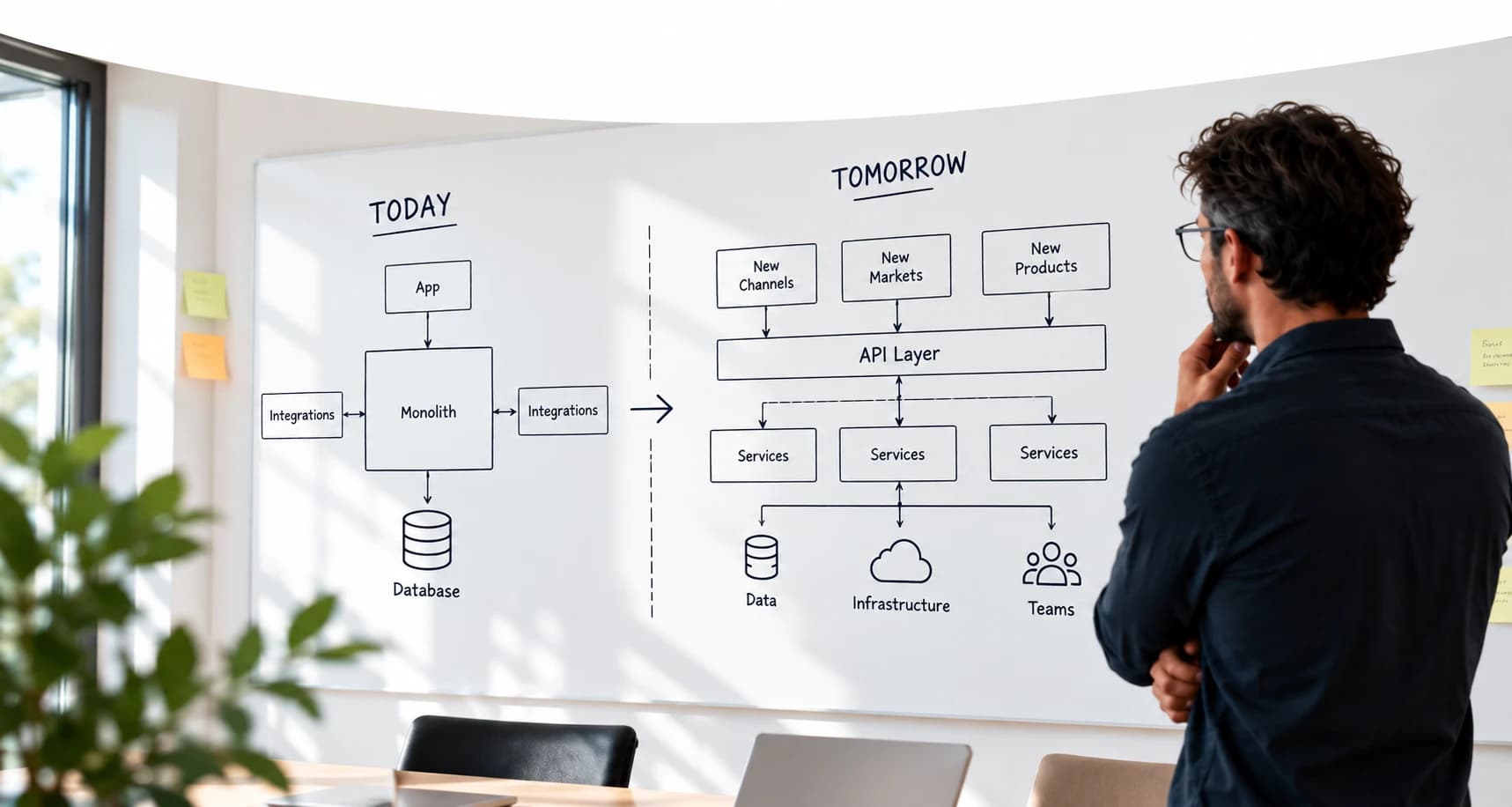
Growth changes the architecture
A system built for one product, one market or one team can become difficult to operate as scale introduces new users, channels, teams and workloads.
New requirements expose old assumptions
New products, regulations, markets and customer expectations can introduce requirements the original system was never designed to accommodate.
Dependencies accumulate
Integrations, shared services, legacy components and tightly coupled data flows can gradually make even small changes dependent on everything around them.
Speed becomes expensive
When every change requires extensive coordination, regression testing or architectural workarounds, delivery slows—and the cost of moving forward rises.
The question isn't whether your technology works today. It's how well it can accommodate what comes next.
Design the foundations for change.
We bring business direction, product thinking and technical architecture together to create systems that can evolve without making every change harder than the last.
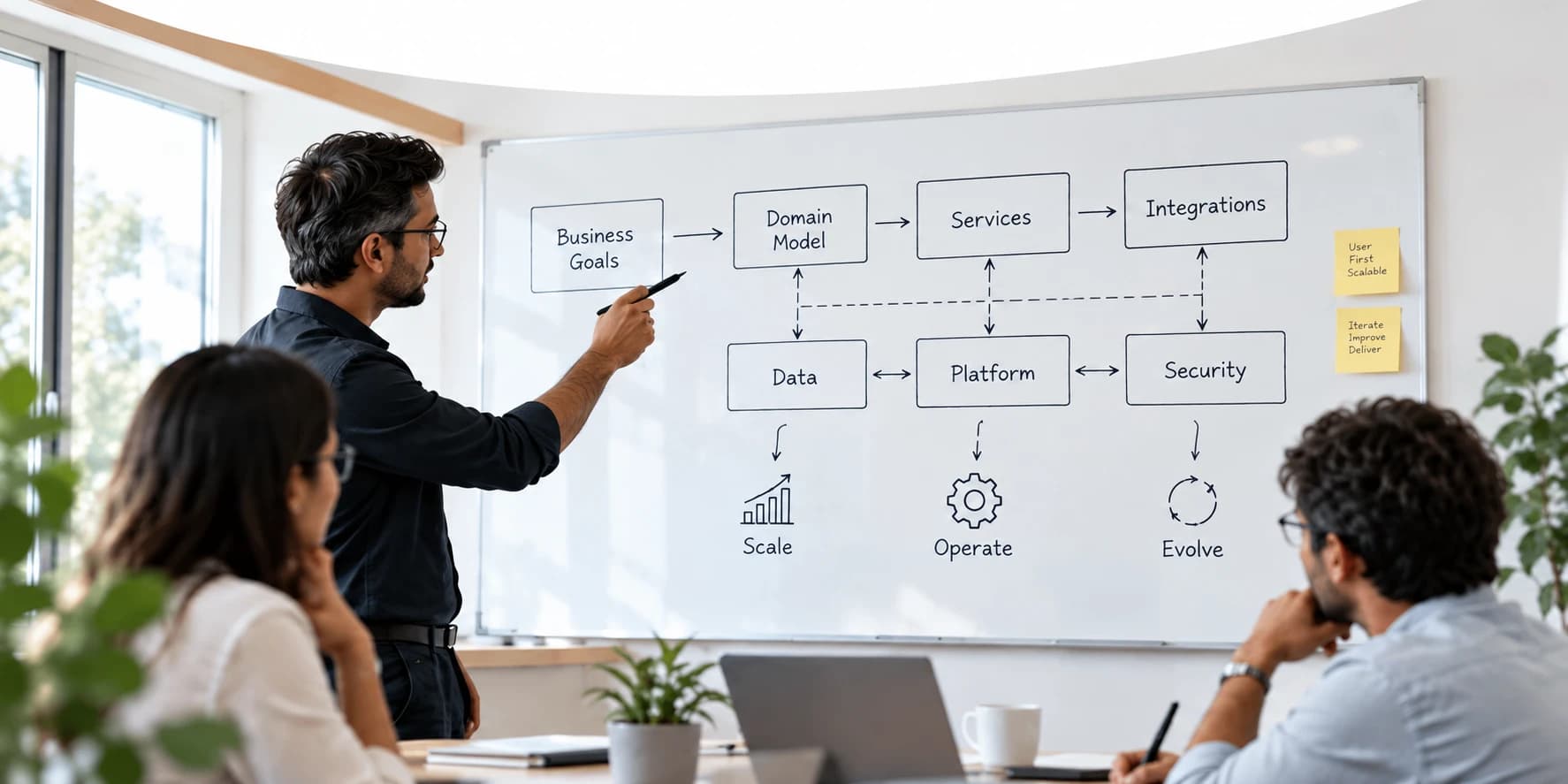
Product & Solution Architecture
Turn business direction into a system that can grow with it.
We translate product goals, business processes and constraints into clear solution architectures—defining domains, services, integrations and data flows around how the business actually needs to operate.
Architecture Modernisation
Evolve what exists without starting over.
We assess existing systems to identify structural constraints, unnecessary complexity and areas that limit change. Then we define a practical path from the current architecture to where it needs to go.
Platform & Engineering Design
Create foundations that make change easier.
We design the platforms, APIs, services, data and engineering practices that enable teams to build, release and operate products with greater confidence.
Architecture for Scale
Design for growth before growth becomes complexity.
We consider the changes that come with more users, products, teams, integrations and markets—so scale is addressed as an architectural concern, not simply an infrastructure problem.
The goal isn't to predict every change. It's to make the important changes easier to make.
Understand first.
Design with intent.
Before changing a system, we understand what the business is trying to achieve, how the technology actually works today, and what needs to be true for it to evolve.
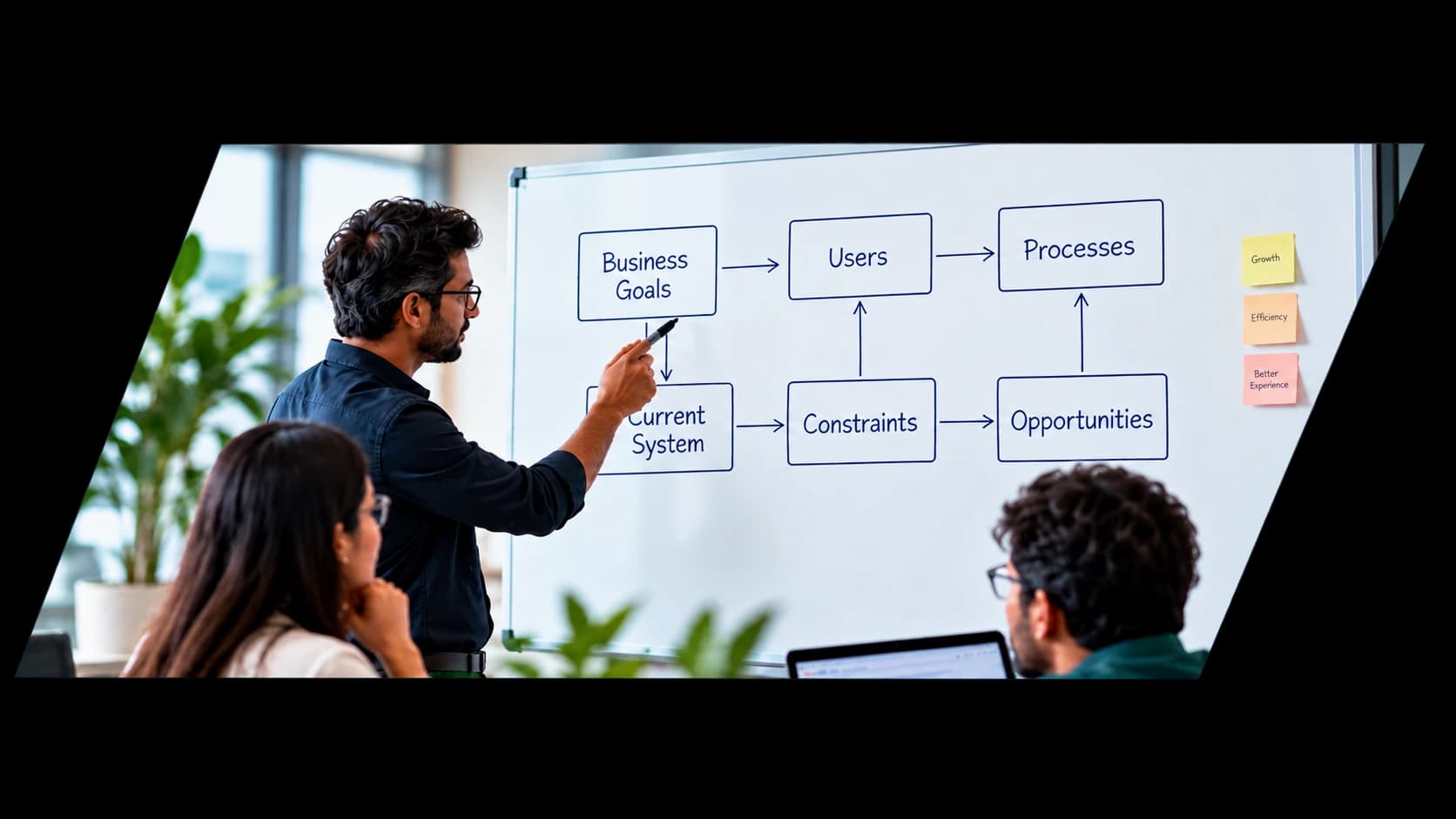
Start with the business, not the technology.
We understand the products, processes, users, operating model and goals behind the system—along with the constraints that shape what is realistically possible.
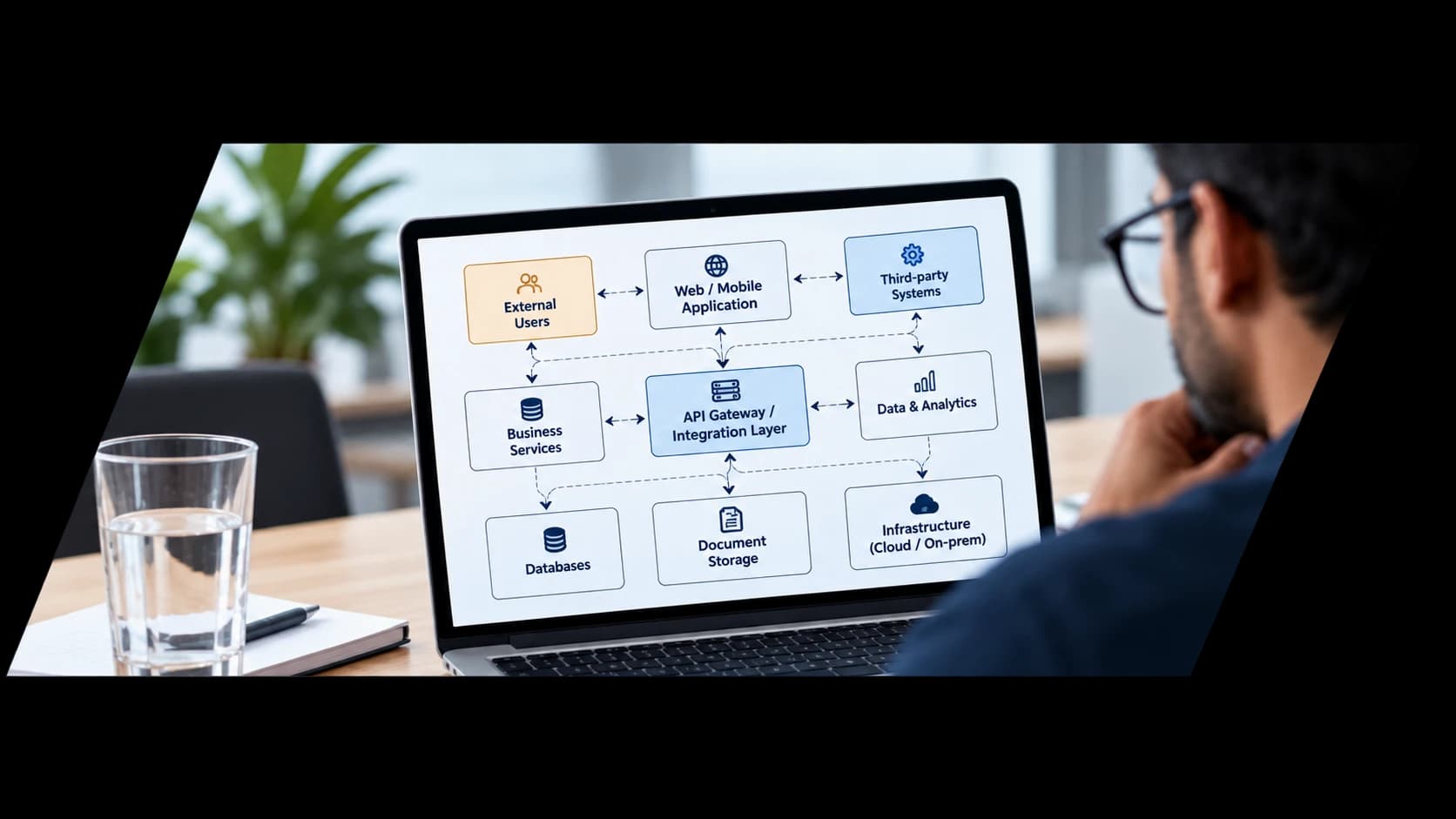
Understand the system beneath the diagrams.
We examine applications, architecture, integrations, data, infrastructure, security and engineering practices to uncover dependencies, bottlenecks and structural constraints.
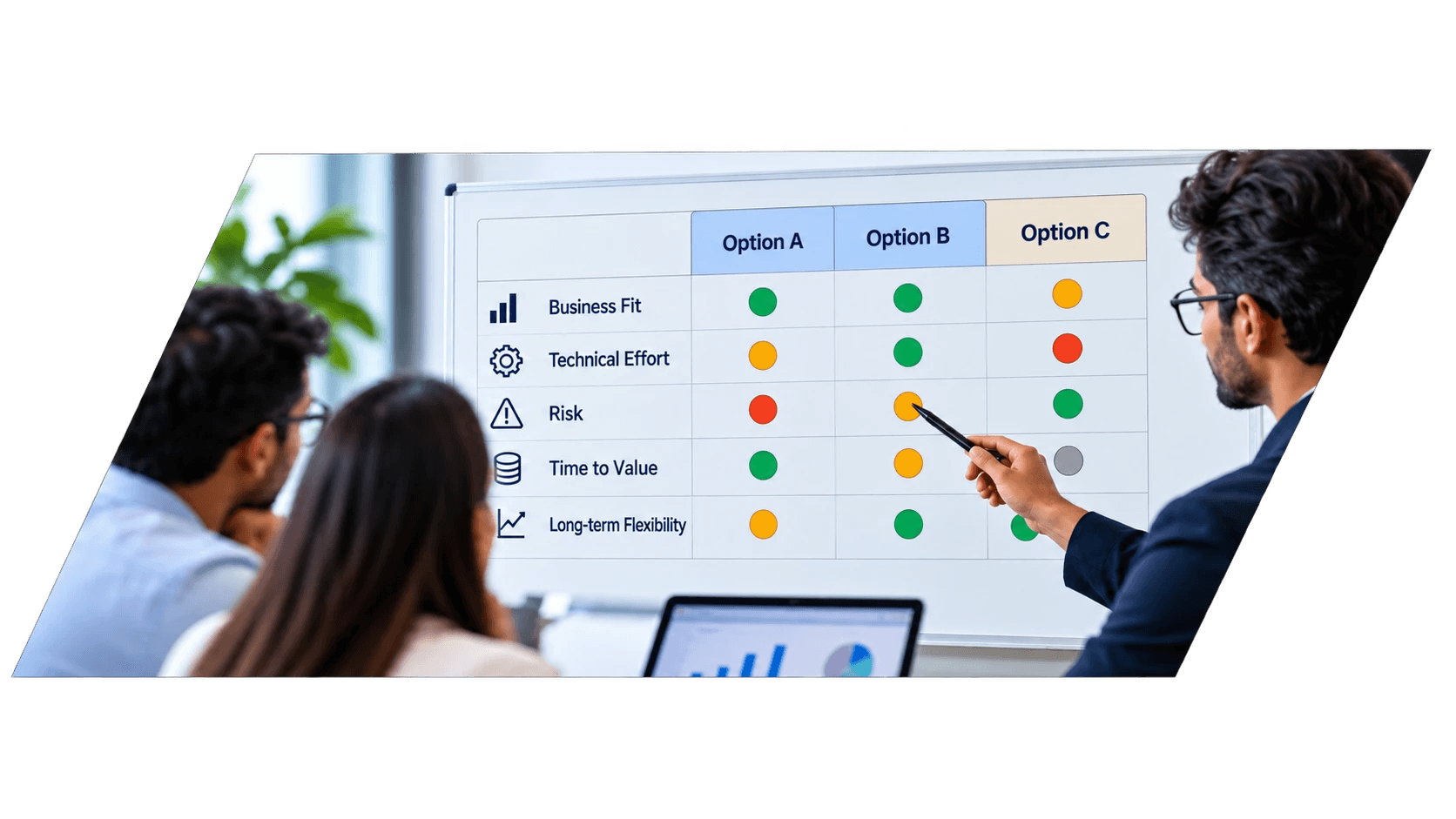
Make architectural decisions you can defend.
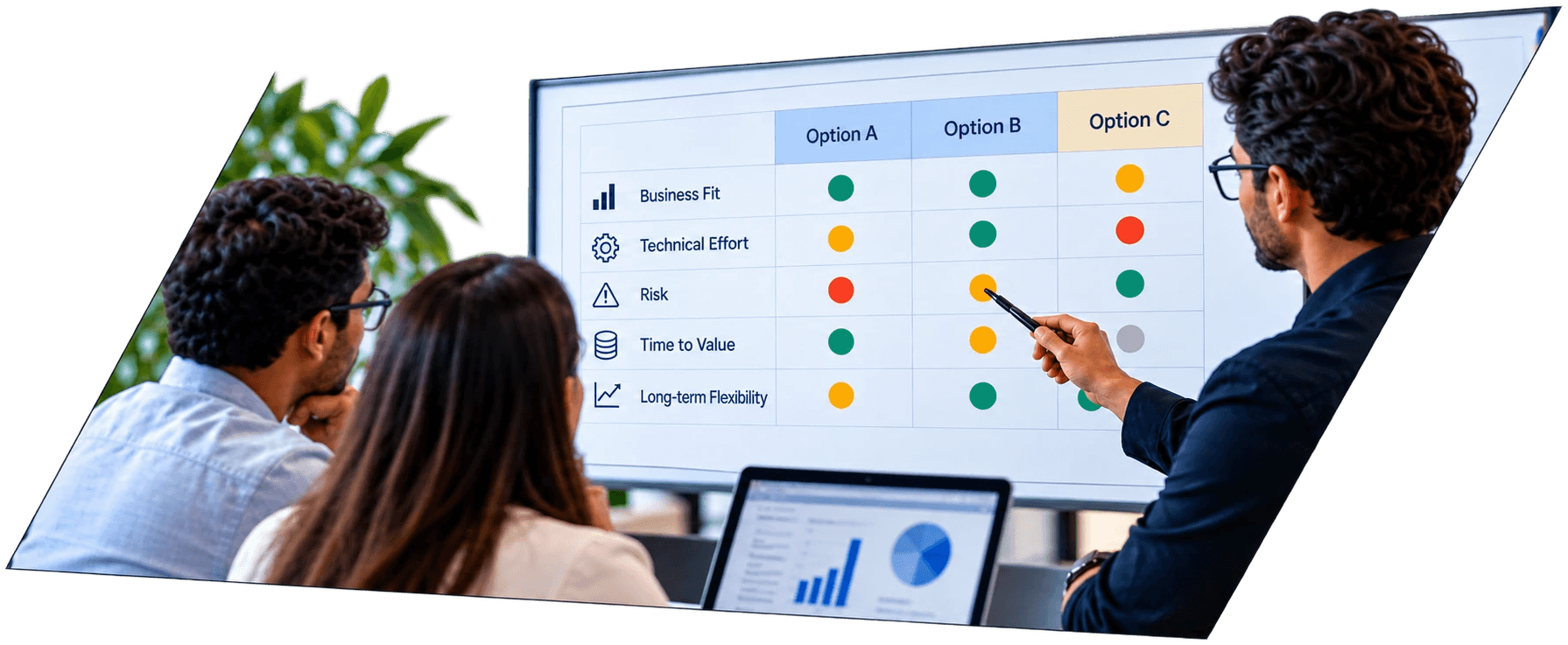
We evaluate options against business priorities, technical constraints, risk and long-term implications—making the trade-offs clear before a direction is chosen.
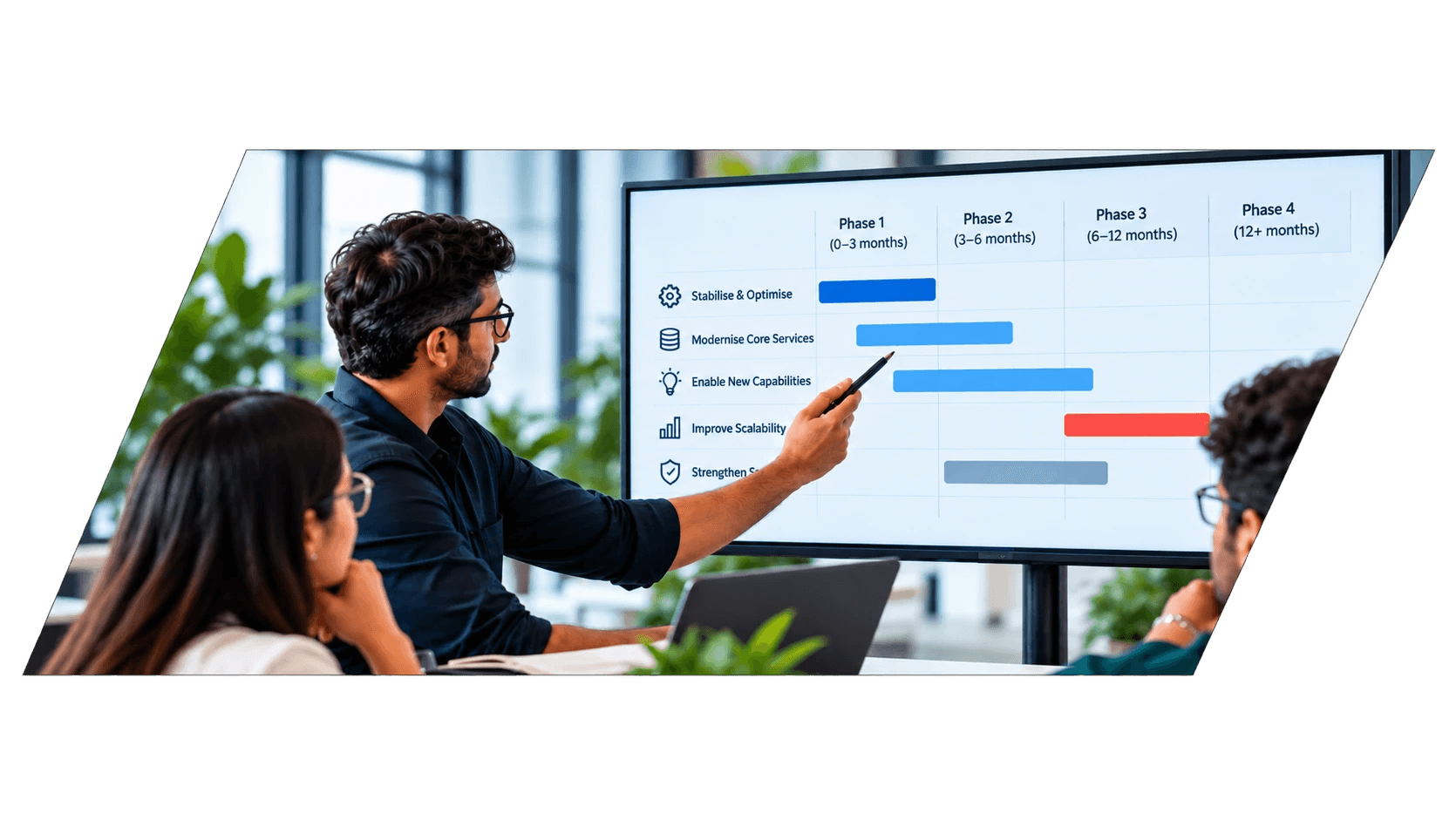
Turn direction into a practical sequence.
We translate the target architecture into a prioritised path forward—what should change now, what can wait, and what needs to remain stable.
We don't redesign everything because we can. We identify what needs to change, what doesn't, and in what order.
Decisions you can
build on.
The outcome isn't another document that sits on a shelf. It's a shared understanding of where your technology stands, what needs to change, and why.
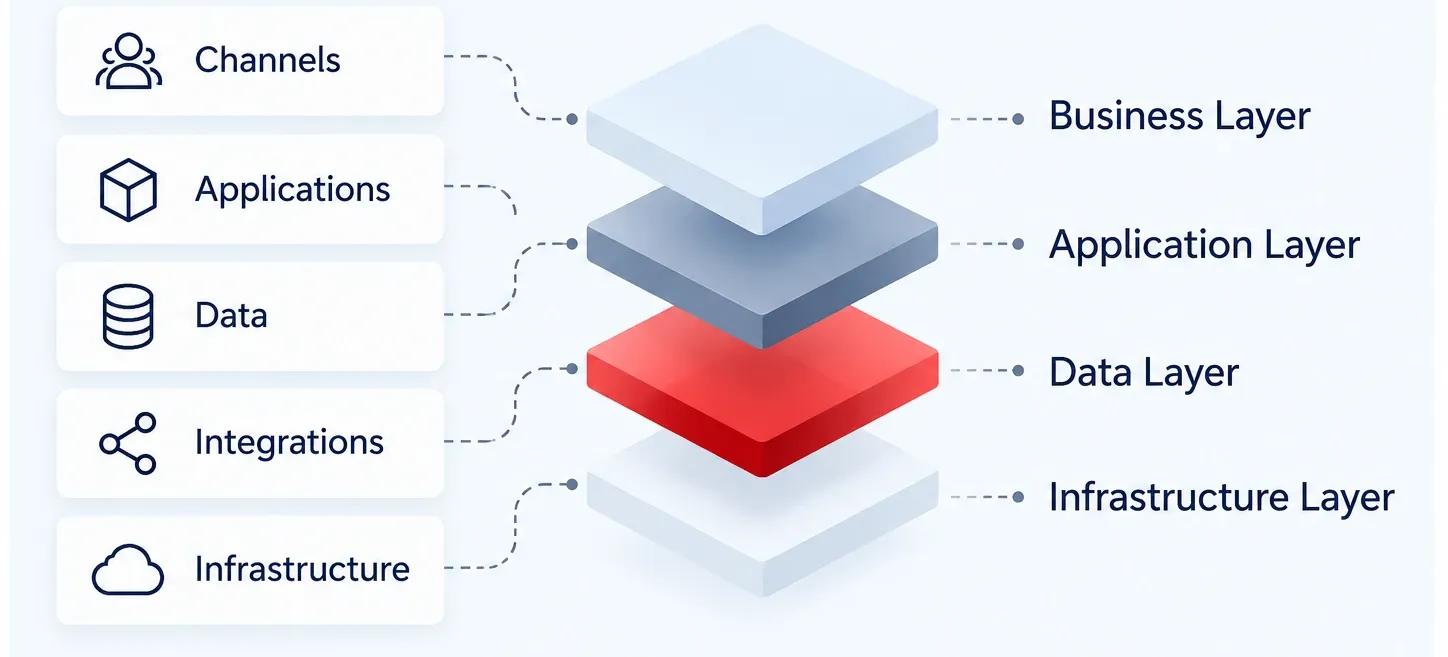
A shared view of where you are and where you're going.
A clear picture of the current architecture, its key relationships and dependencies, and the principles shaping the target direction.
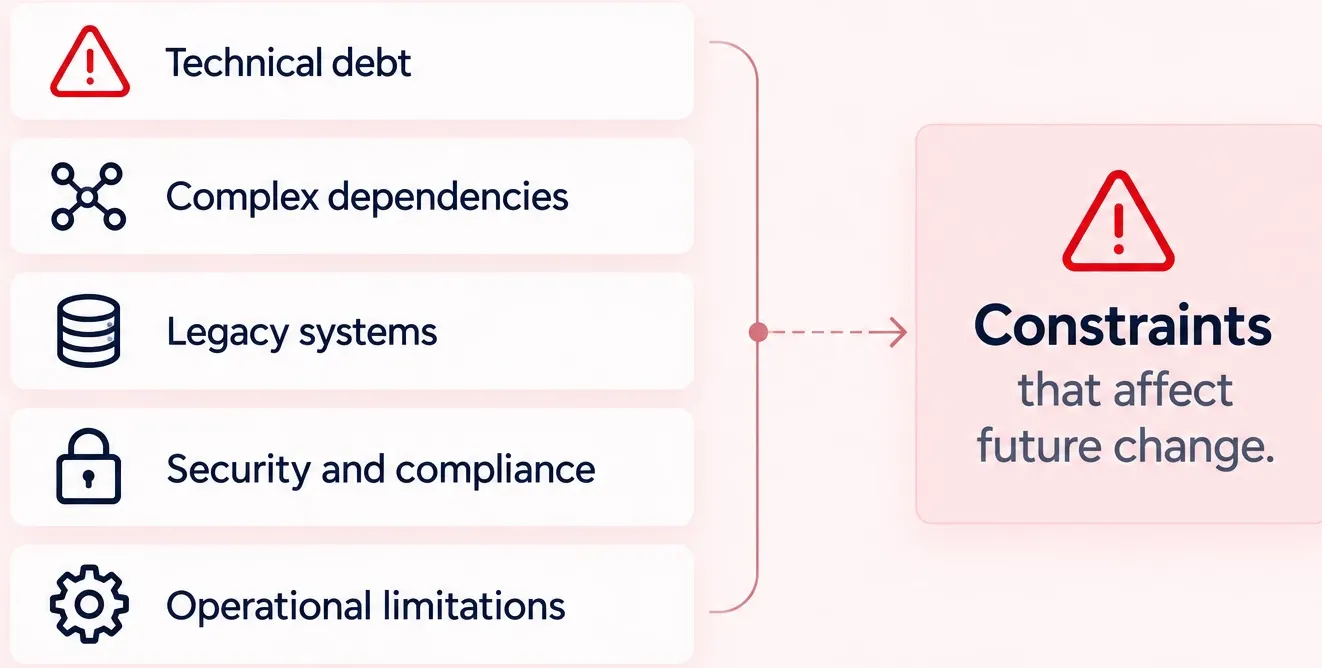
A clearer view of what could get in the way.
We surface structural limitations, dependencies, technical debt and architectural decisions that could make future change harder, riskier or more expensive.
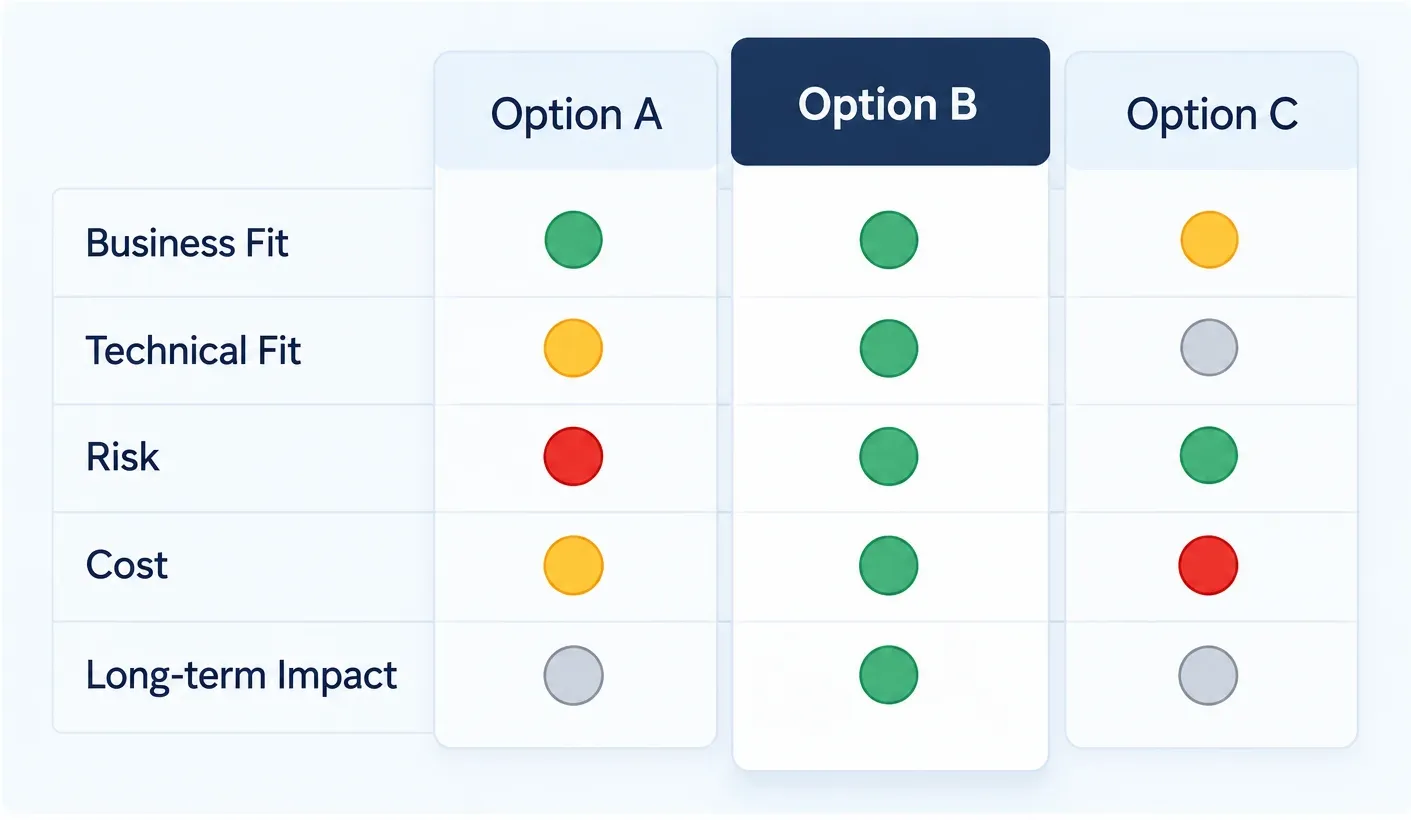
Technology decisions with the reasoning behind them.
Options are evaluated against business priorities, constraints, risk and long-term implications—so teams understand not only what was chosen, but why.
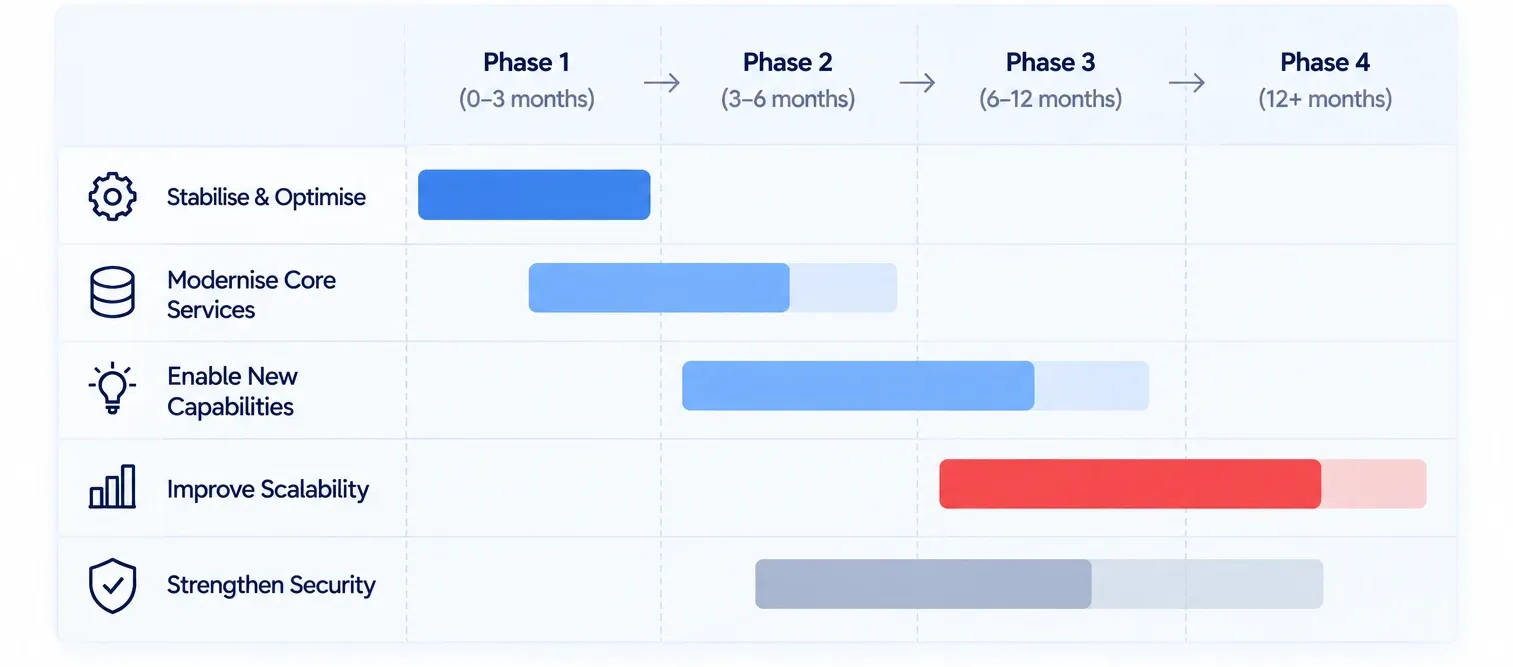
A roadmap grounded in what matters now.
The target direction becomes a practical sequence of changes—what should happen first, what can wait, and what needs to remain stable.
Clarity for the decisions ahead. A practical path for getting there.
From architectural uncertainty to a path forward.
Architecture matters when it helps an organisation make better decisions about what comes next.
The situation
A system that had outgrown its original assumptions.
Growth, changing requirements and accumulating dependencies had made the existing technology landscape harder to evolve.
The challenge
The answer wasn't to replace everything.
The organisation needed to understand what should change, what could remain, and which architectural decisions would matter most for the road ahead.
The work
Architecture before implementation.
QLeap assessed the existing landscape, mapped key dependencies and constraints, evaluated architectural options and defined a practical sequence for change.
The result
A shared direction for what comes next.
The engagement established a clearer architectural direction, made the important trade-offs visible and gave the organisation a prioritised path forward.
 Planning What's Next?
Let's understand what needs to change.
Bring us the system you're trying to evolve, the decision you're trying to make, or the problem you're trying to solve.