01

Build something new
Turn an idea into a working digital capability.
Shape the architecture, engineering and delivery foundation needed to take a new product or business initiative into production.
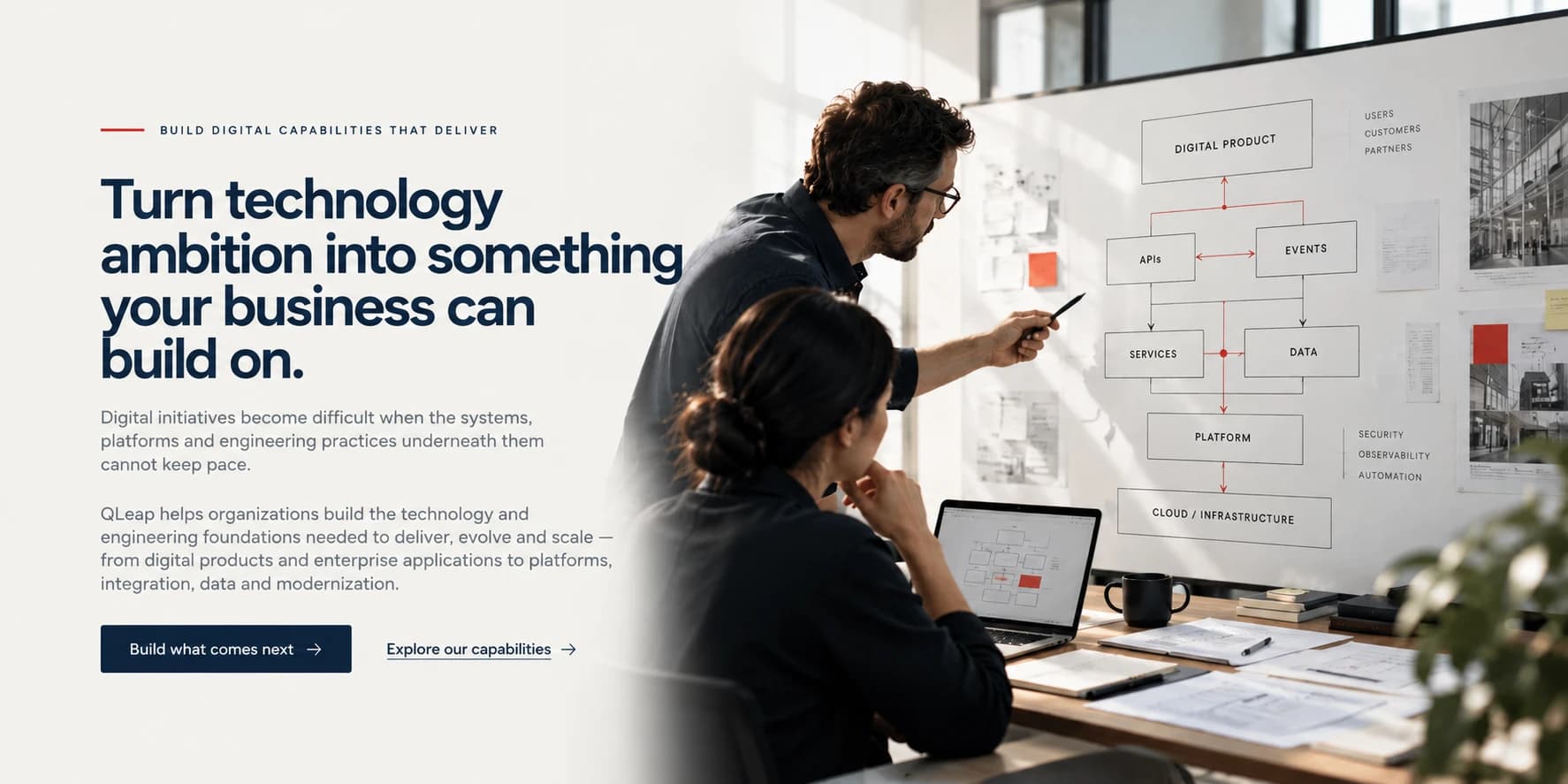
Digital initiatives become difficult when the systems, platforms and engineering practices underneath them cannot keep pace.
QLeap helps organizations build the technology and engineering foundations needed to deliver, evolve and scale — from digital products and enterprise applications to platforms, integration, data and modernization.
A business can know exactly where it wants to go and still struggle to get there.
Legacy systems slow change. Critical knowledge sits with a few people. Integrations become increasingly difficult to maintain. Platforms are stretched beyond their original design. Teams spend more time working around constraints than building what the business needs next.
Eventually, the technology estate itself becomes a constraint on execution.
The answer isn't always replacing everything. It's knowing what needs to change, what can remain, and where stronger engineering foundations will make the difference.
Existing systems slow change and limit speed.
Critical knowledge sits with a few people.
Connections become harder to maintain over time.
Systems are pushed beyond their original design.
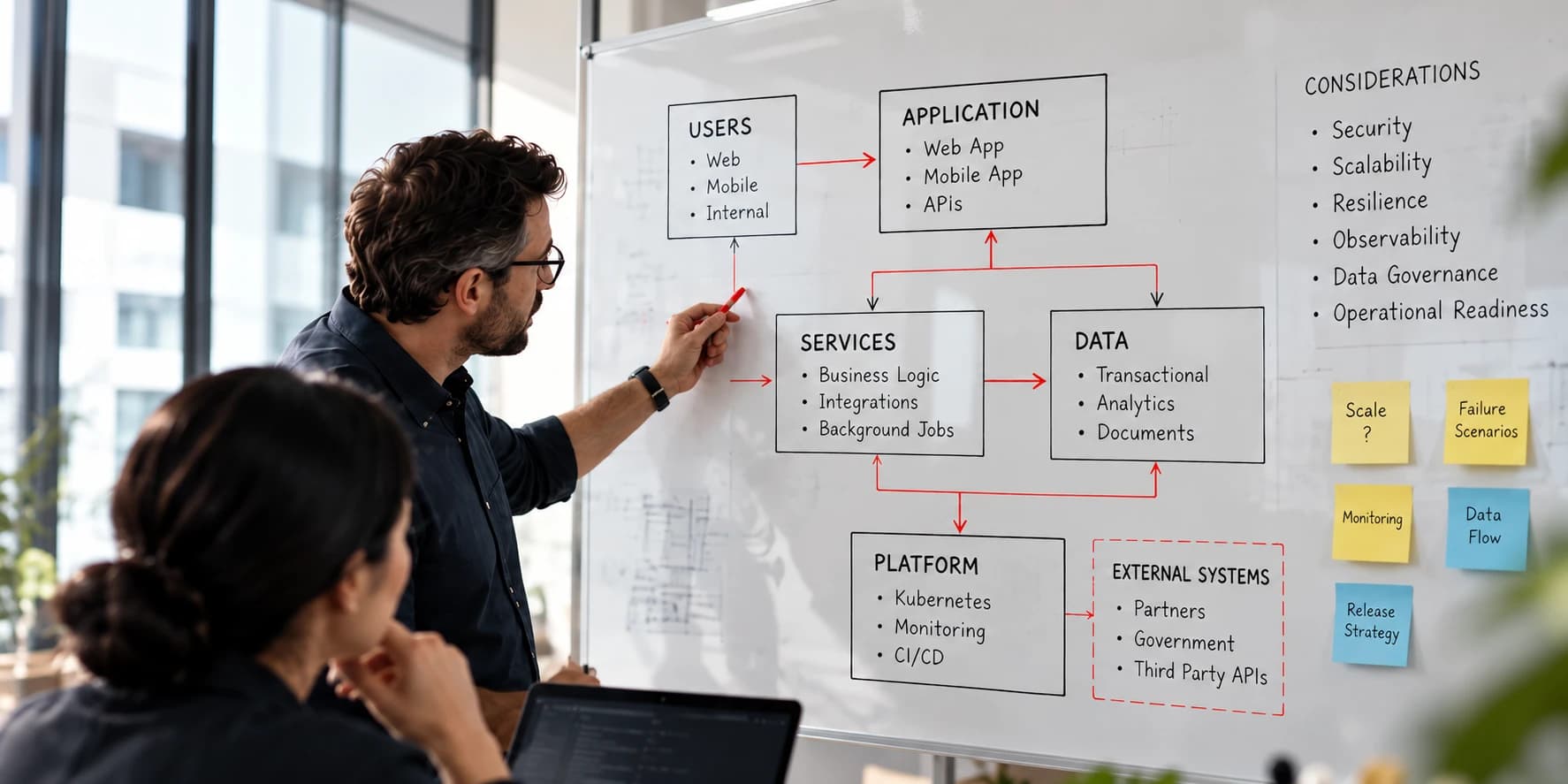
Architecture, domain understanding, security, data, testing and operational requirements shape the outcome long before software reaches production.
We bring those considerations into the engineering process from the beginning — so what gets built can evolve with the business.
Understand before building
Start with the problem, not the implementation.
Understand the business context, users, workflows, constraints and dependencies before deciding how the technology should work.
Design for change
Build for the next requirement, not just the current one.
Deliberate architecture and clear boundaries make it easier to change one part of a system without destabilizing everything around it.
Engineer for production
A system isn't finished when the code is finished.
Security, testing, observability, resilience and automation need to be considered from the beginning — because production is where engineering decisions meet reality.
Deliver in increments
Reduce uncertainty by delivering something real.
Break complexity into meaningful increments that can be built, validated and improved before the next decision is made.
Engineering isn't a straight line from requirements to code. It's a continuous cycle of understanding, decision-making, delivery and learning.
Build with today's requirements in mind. Engineer for what comes next.
A project can succeed because a few experienced people push it across the line. A delivery capability is different.
It allows teams to plan, build, release, operate and improve repeatedly — without relying on individual heroics or reinventing the way work gets done every time.

Product
Clear ownership and direction.
Teams understand what matters, who owns it and how success is measured — keeping engineering connected to business outcomes.
Engineering
Consistent ways of building.
Shared standards, quality practices and automation create a reliable engineering baseline that teams can apply as products and systems grow.
Platform
A foundation teams can build on.
Shared platform capabilities reduce repeated infrastructure and operational work, allowing teams to focus more on the products they are responsible for.
Data
Information teams can trust.
Well-managed data gives products, teams and decision-makers a dependable foundation for operating the business and making informed decisions.
Delivery
A repeatable path to production.
Planning, integration, validation and release become part of a consistent flow — making progress visible and reducing unnecessary friction between development and production.
Operations
Capability that continues after release.
Monitoring, incident response, resilience and recovery keep systems dependable once they are in the hands of real users.
When these elements work together, delivery becomes part of the organization.
Product direction gives engineering a purpose. Engineering creates the software. Platforms make delivery repeatable. Data provides a foundation for products and decisions. Delivery practices create flow. Operations keeps the capability dependable in production.
When these elements work together, the organization becomes less dependent on individual effort and better equipped to deliver continuously.
The goal is not to create a successful project.
It is to create the ability to keep delivering.
Digital capabilities should solve a real business problem today without creating a bigger technology problem tomorrow.
We build products, applications and engineering foundations around how the business operates — with the architecture, integration and engineering discipline needed to evolve as requirements change.
Digital Products
Turn ideas and opportunities into usable digital products.
Customer-facing and internal products built around real users, workflows and measurable business outcomes — from the first release through continuous evolution.
Enterprise Applications
Connect the business through software that works the way people work.
Applications that bring processes, people and information together — replacing fragmented workflows with systems that can evolve as the organization changes.
Cloud & Platform Engineering
Build the foundations that make reliable delivery possible.
Cloud, infrastructure, automation and operational capabilities designed to make digital systems reliable, observable and repeatable to deliver.
Integration & APIs
Make systems work together without making the architecture harder to change.
APIs and integration architectures that connect applications, services, partners and external platforms while keeping dependencies understandable and manageable.
Data & Intelligence
Turn information into something the business can use.
Data foundations that connect, govern and make information usable across products and operations — with intelligent capabilities where they create meaningful value.
Modernization
Change what needs to change without throwing away what still works.
Incremental modernization that reduces technology constraints while protecting business continuity and preserving the systems that still create value.
Stronger together.
These capabilities rarely exist in isolation. A digital product depends on applications. Applications depend on integration and data. All of them depend on platforms, infrastructure and operational foundations. Modernization strengthens the entire environment over time.
Build the capability today. Keep the freedom to change tomorrow.
Where users and business processes meet technology.
Connect systems through deliberate interfaces.
Keep business logic clear and changeable.
Security
&
Observability
Make information dependable and usable.
Give teams a reliable foundation to build on.
Build for performance, availability and growth.
Five questions
every foundation
should answer
Strong foundations don't make technology invisible.
They make change easier.
Whether you're building something new, modernizing what exists, strengthening your engineering team or scaling delivery,
we help turn the next step into a practical path forward.
Turn an idea into a working digital capability.
Shape the architecture, engineering and delivery foundation needed to take a new product or business initiative into production.

Change what needs to change.
Identify the technology constraints that matter and modernize incrementally while protecting what still works.

Add depth where your team needs it.
Bring in architectural expertise, engineering discipline or technical leadership while building on the capability you already have.

Make delivery more repeatable.
Strengthen platforms, processes and engineering capacity when demand has outgrown the current way of working.
Start with where you are.
Build from there.
They start with decisions — what to change, what to preserve, what to simplify and where complexity is actually justified.
A few perspectives from the work we do.
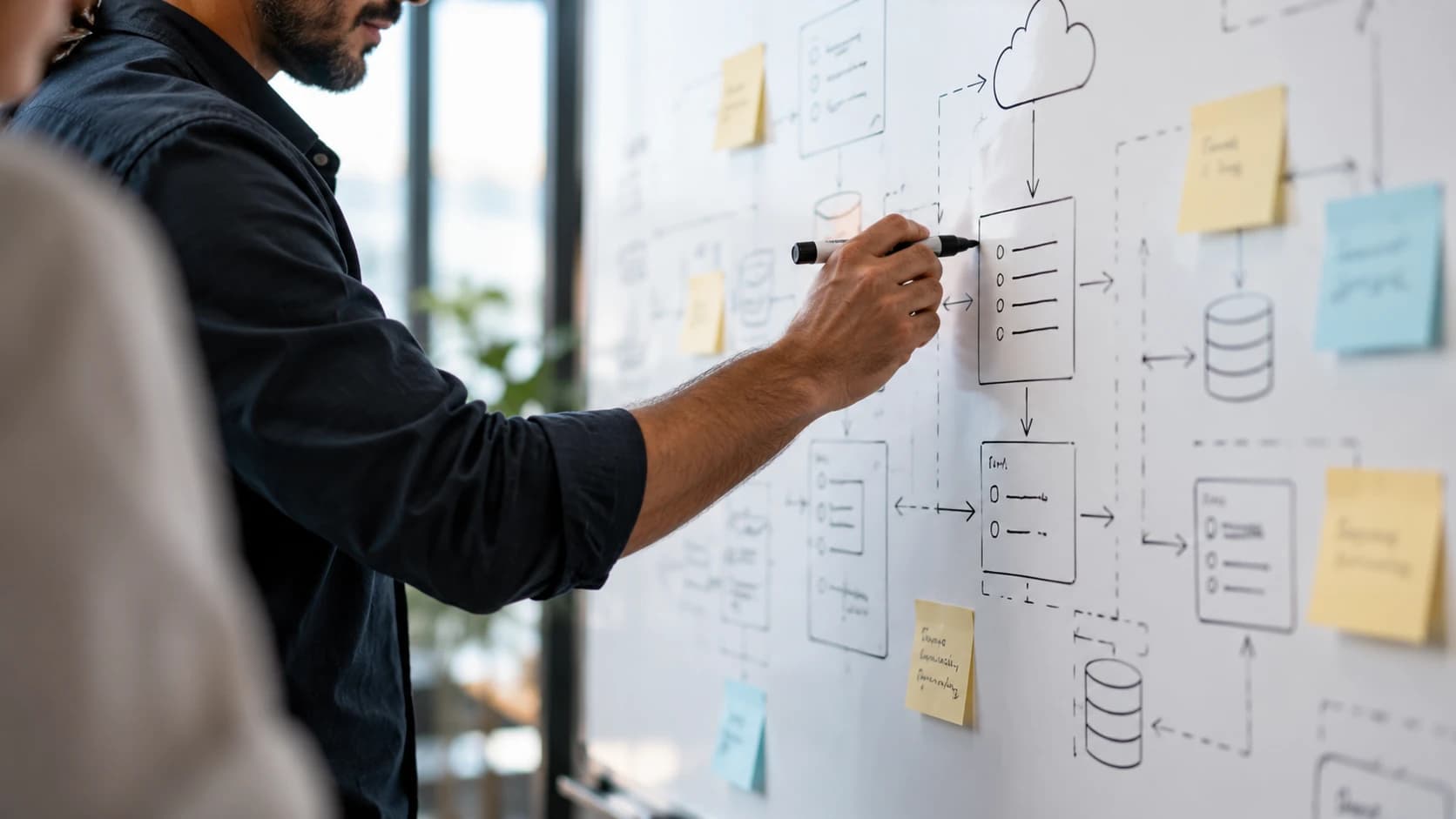
Small changes rarely stay small when the underlying architecture can't absorb them.
What seemingly minor requirements can reveal about the systems underneath.
Read the article
Growth exposes the assumptions built into systems.
Seven questions to help determine whether an architecture can grow without becoming harder to change.
Read the article
Good external expertise should make the organization stronger.
How technical partnerships can add capability without creating long-term dependency.
Read the articleIdeas from the work.
Perspectives for what comes next.
 Technology Consulting & Engineering Partner
We'd like to use anonymized session recordings and heatmaps (Microsoft Clarity) to see how visitors use this site. Form data you type is never recorded.