
September 29, 2026
From Legacy Systems to Modern Platforms: A Practical Guide

QLeap
Your legacy system may not be broken. That doesn't mean it isn't holding the business back. It still works. People know how to use it. The business depends on it.
But a small change takes weeks. A new integration becomes a project of its own. Finding developers who understand the system gets harder. And scaling the platform starts becoming increasingly expensive.
At some point, the question isn't “Does the system work?”
Is the system still helping the business move forward?
That is where modernization begins.

Start With the Problem, Not the Technology
One of the easiest mistakes to make is to start modernization with a technology decision. “Let's move it to the cloud.” “Let's rewrite it using a modern framework.” “Let's break it into microservices.” These might all be valid decisions. But none of them answers the most important question: What are we actually trying to fix?
Maybe releases take too long. Maybe the database has become a bottleneck. Maybe integrations are difficult to maintain. Maybe the system cannot scale when demand increases. Or perhaps the business has simply changed significantly since the application was first built. Understand that first. Then decide what needs to change.
You Don't Have to Replace Everything
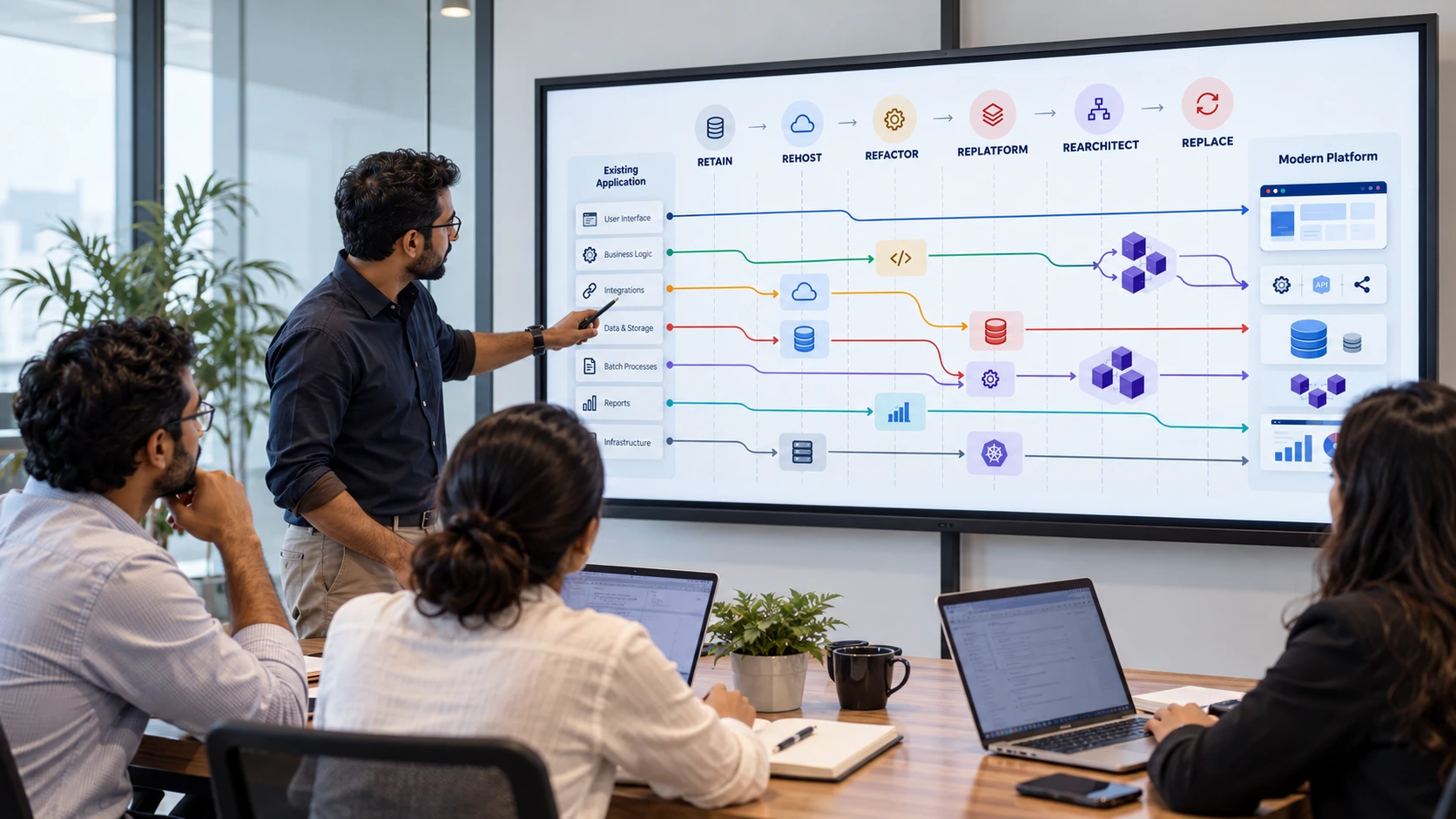
Modernization doesn't automatically mean throwing away the existing system. Different parts of an application may need different approaches. Some workloads may simply need to move to a better infrastructure. Some components may benefit from refactoring. Others may need a new architecture altogether. And sometimes, replacement is the right answer.
The important thing is to make that decision based on business value, technical risk, dependencies, and future needs—not because a particular technology happens to be popular.
A 15-year-old application isn't necessarily a problem. A 15-year-old application that takes three months to make a change might be.
Understand What You Have Before Deciding Where to Go
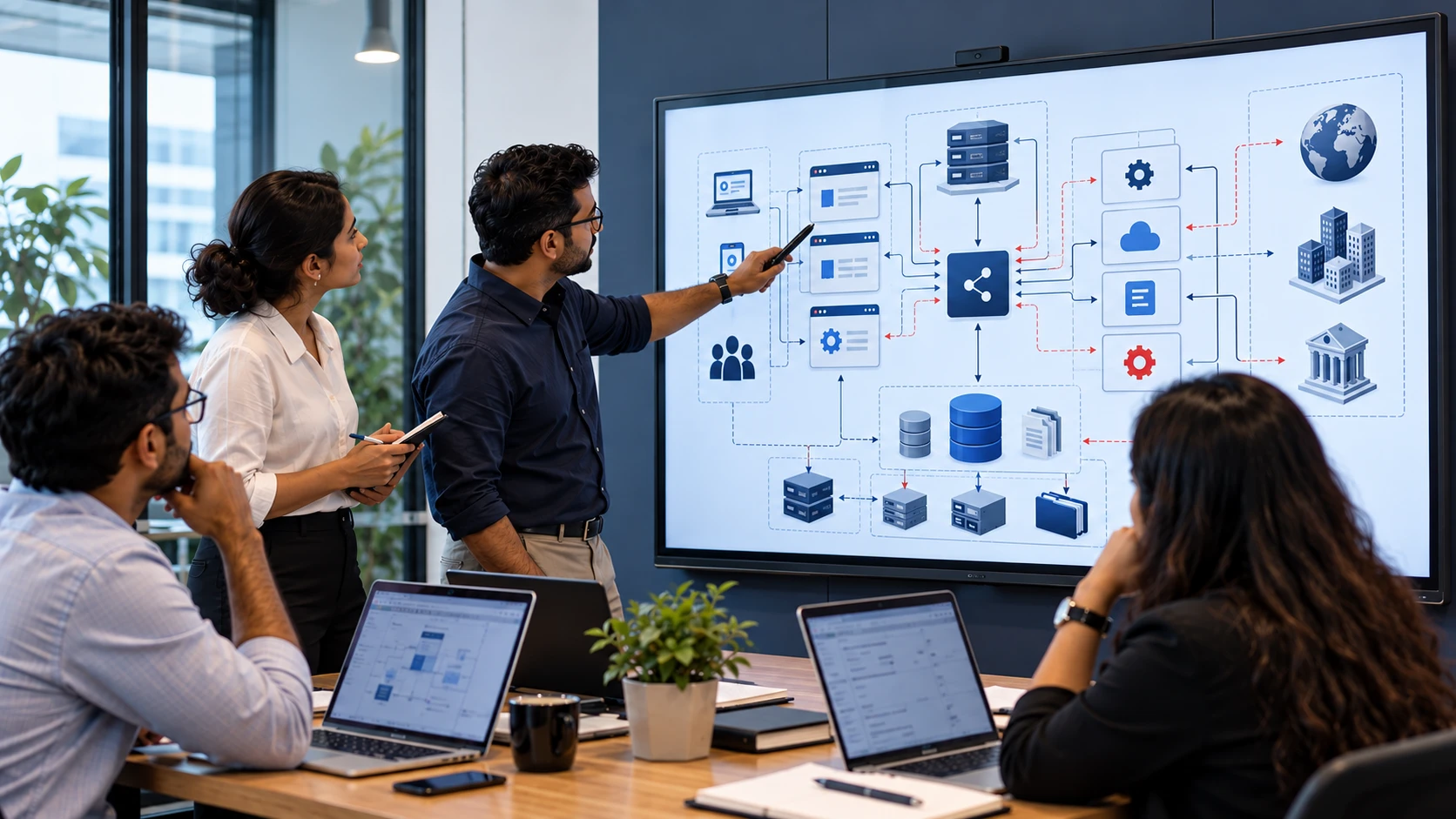
Before designing the target platform, understand the current one. Map the major applications, databases, integrations, interfaces, authentication mechanisms, batch processes, reports, and operational dependencies. More importantly, identify the parts that the business simply cannot afford to disrupt.
This is where modernization projects often become more complicated than expected. The application code may be only one part of the story. Years of integrations, business rules, data dependencies, and operational processes may have grown around it. You need to understand that ecosystem before changing it.
Avoid the Big-Bang Rewrite
A complete rewrite can sound appealing. Build the new platform. Move everything across. Switch off the old system. The problem is that the business doesn't stop changing while the new system is being built. A modernization program can take months or years. During that time, the existing platform still needs to operate, support users, and accommodate new requirements.
A phased approach can reduce that risk. Modernize a well-defined capability. Connect it to the existing environment. Move the workload or users when it is ready. Then continue with the next capability. This creates smaller points of change—and gives the team an opportunity to learn along the way.
Treat Data as a First-Class Concern
Applications can be rewritten. Data is much harder to replace. Years of transactions, customer information, documents, configurations, and historical records may sit inside the existing platform. Moving that data is not simply a matter of changing database technology.
You need to know:
- What needs to move?
- What can be archived?
- What needs transformation?
- Which applications depend on it?
- How will the migrated data be validated?
- How will the final cutover work?
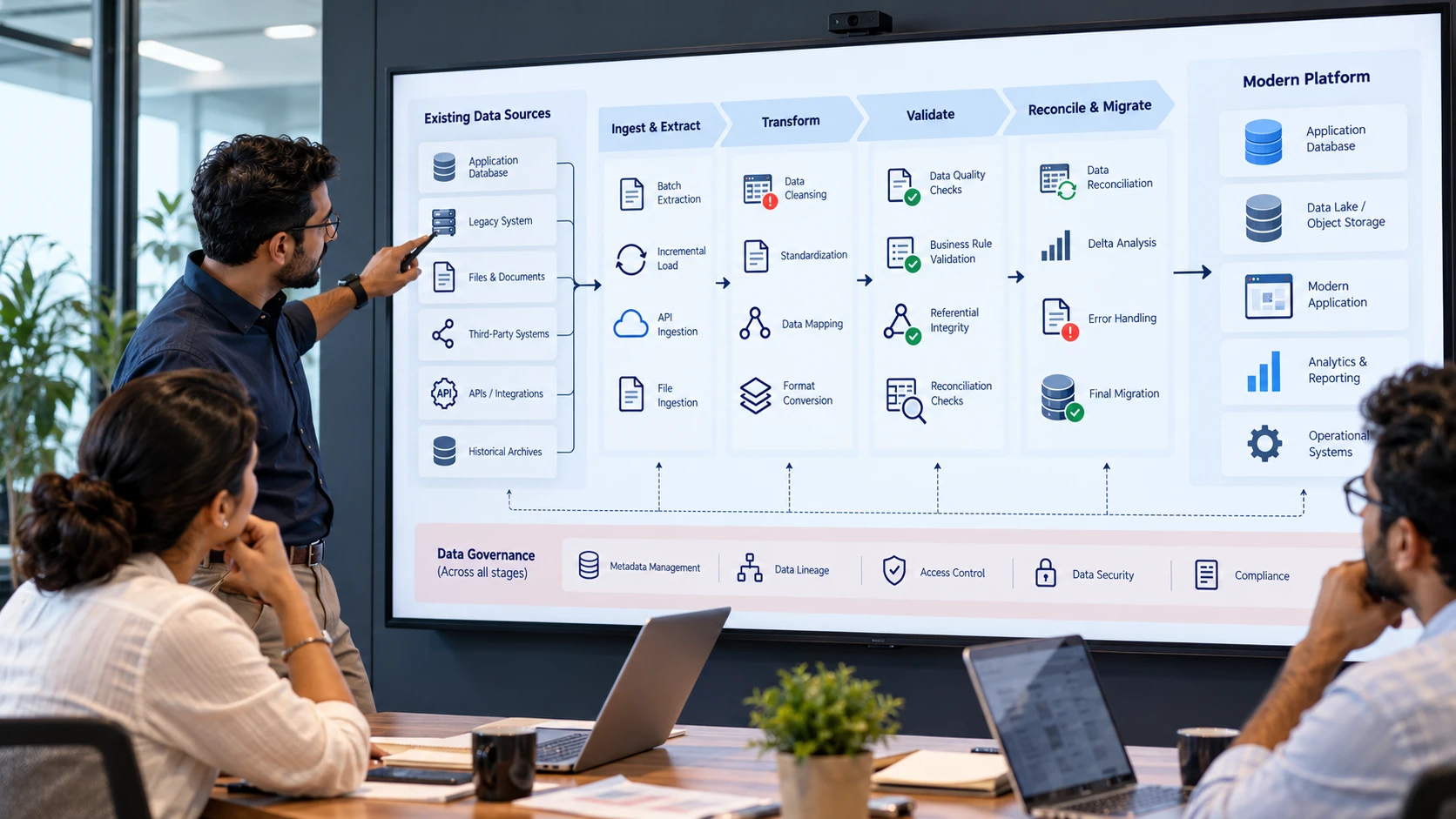
A migration can be technically successful and still be a business failure if the data isn't right.
Modern Doesn't Automatically Mean Microservices
This is worth saying explicitly. A monolith doesn't become a modern platform simply because it has been split into dozens of microservices. Architecture should follow the requirements. For some systems, a well-structured modular application may be the right answer. For others, independently deployable and scalable services may make sense.
The objective isn't to use the newest architecture. The objective is to build a platform that is easier to change, operate, scale, and secure.
Think Beyond the Migration
Going live on the new platform isn't the end of modernization. The new environment also needs to be designed for what happens afterward.
That means thinking about:
- Observability and monitoring
- Security
- Automated deployments
- Backup and recovery
- Performance
- Capacity
- Documentation
- Operational ownership
Otherwise, an organization can end up with a modern technology stack while carrying the same operational problems into the new environment.
A Practical Modernization Roadmap
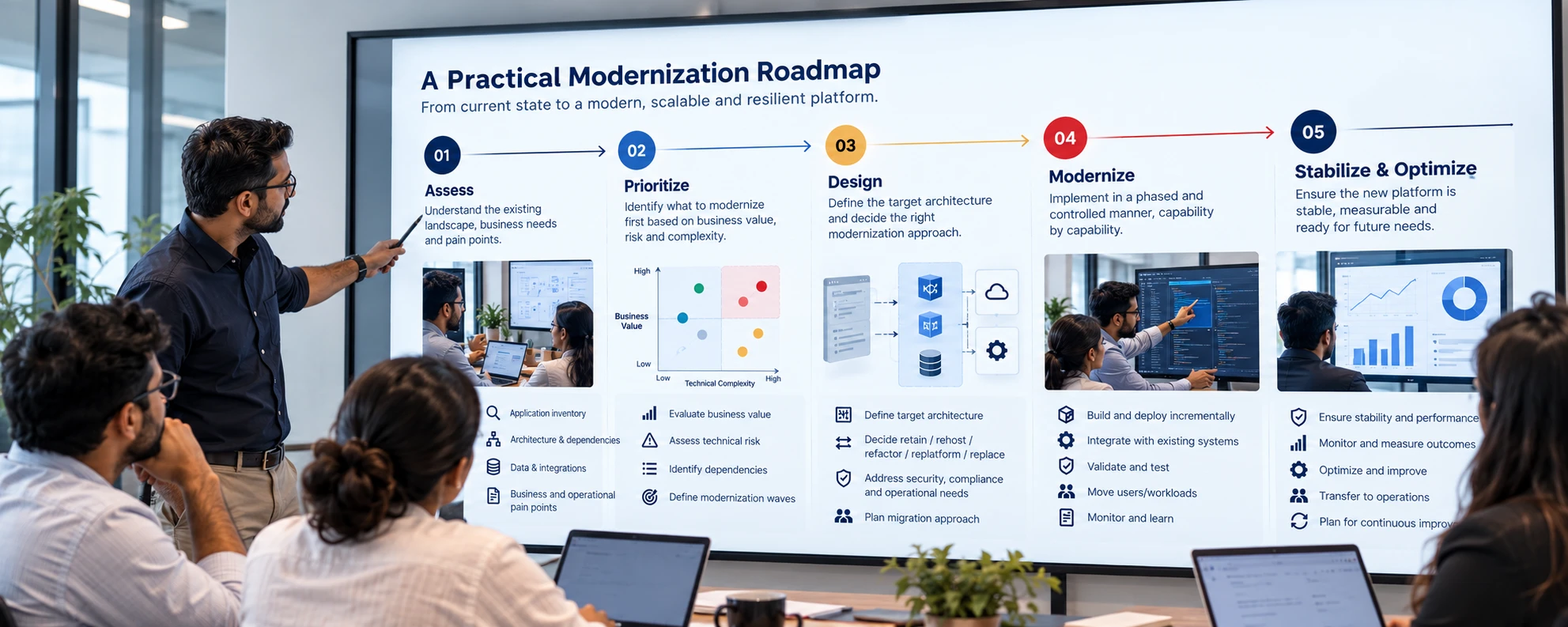
A modernization program doesn't need to be complicated. A practical approach can be built around five stages:
1. Assess: Understand the existing applications, architecture, data, integrations, infrastructure, and business pain points.
2. Prioritize: Identify what should change first based on business value, technical risk, complexity, and dependencies.
3. Design: Define the target architecture and decide what should be retained, refactored, replatformed, rearchitected, or replaced.
4. Modernize Incrementally: Move capability by capability rather than attempting to change the entire landscape at once.
5. Stabilize and Optimize: Measure the new platform, address operational gaps, and continuously improve it.
The Real Goal of Modernization
The goal isn't to have a newer technology stack. It's to give the business room to move. New products should be easier to launch. Integrations should be easier to add. Changes should be safer to release. Systems should be easier to scale. And teams shouldn't need to understand every historical decision made fifteen years ago just to make a change today.
Modernization isn't about making yesterday's system look like today's technology.
It's about building the foundation for what the business needs tomorrow.